

The Democratic Republic of the Congo (DRC) has become one of Central Africa’s most closely watched investment destinations, and company registration in DRC is the first legal milestone every foreign entrepreneur must clear before operating in the country. With vast mineral reserves, a growing consumer market of more than 100 million people, and reforms aimed at simplifying business entry, the DRC offers real commercial upside. But the process still involves government filings, statutory documentation, and compliance with regional commercial law, which means investors who understand the system in advance move faster and avoid costly delays.
This guide walks through everything a foreign investor, startup founder, or multinational corporation needs to know about registering a company in the DRC in 2026, from choosing a legal structure to opening a corporate bank account in Kinshasa.
Why the Democratic Republic of Congo Is Attracting Foreign Investors
The DRC sits at the center of Central Africa’s mining, energy, and infrastructure boom. The country holds some of the world’s largest reserves of cobalt and copper, both critical inputs for electric vehicle batteries and renewable energy technology. Beyond mining, sectors such as agribusiness, telecommunications, construction, and commercial logistics are expanding quickly as the government pushes to formalize the economy and attract capital.
Foreign investors are also drawn to the DRC’s investment code, which permits full foreign ownership in most sectors. There is no requirement to bring in a local shareholder or partner to hold equity, which gives international companies direct control over their subsidiaries from day one. Combined with a young, urbanizing population and unmet demand across nearly every consumer category, the fundamentals continue to pull in entrepreneurs who are willing to navigate the registration process correctly.
Understanding the Legal Framework for Company Registration in DRC
Before filing any paperwork, it helps to understand the two pillars that govern business formation in the country: OHADA law and the GUCE single-window system.
OHADA Law and Its Role in DRC Business Formation
The DRC is a member state of OHADA, the Organisation for the Harmonization of Business Law in Africa, which unifies commercial legislation across 17 African nations. Under the OHADA Uniform Act on Commercial Companies, companies registered in the DRC follow standardized rules on incorporation, governance, shareholder rights, and dispute resolution. This matters for foreign investors because it means contracts, share structures, and corporate governance follow a predictable legal framework rather than a purely domestic system, and disputes can be resolved through a shared regional court rather than navigating an unfamiliar national judiciary alone.
The Guichet Unique de Création d’Entreprise (GUCE)
Historically, registering a business in the DRC meant visiting multiple ministries separately for tax registration, commercial court filing, and statistical registration. The government consolidated this into the Guichet Unique de Création d’Entreprise, or GUCE, a single-window agency in Kinshasa that centralizes incorporation, notary services, tax ID issuance, and commercial registry filing. Working through GUCE significantly shortens the administrative chain and is now the standard route for both local and foreign company registration in DRC.
Choosing the Right Business Structure in DRC
Selecting the correct legal entity shapes your liability exposure, capital requirements, and long-term operating flexibility. The DRC, under OHADA rules, recognizes several structures, but three are most relevant to foreign investors.
SARL (Société à Responsabilité Limitée)
The SARL, or limited liability company, is the most common vehicle for small and medium-sized foreign subsidiaries entering the DRC. It requires a relatively low minimum share capital, limits each shareholder’s liability to their capital contribution, and can be formed with as few as one shareholder and one director. For most consulting firms, trading companies, and service businesses testing the DRC market, the SARL offers the fastest and most cost-efficient path to a legal entity.
SA (Société Anonyme)
The SA, or public limited company, suits larger-scale operations such as mining ventures, infrastructure projects, or capital-intensive manufacturing. It requires a higher minimum capital and a more formal governance structure, including a board of directors, but it also signals a stronger institutional presence to banks, government counterparties, and joint-venture partners. Companies planning to raise significant local financing or list shares typically choose this structure.
Branch Office (Succursale)
A branch office allows an existing foreign corporation to operate directly in the DRC without incorporating a separate legal entity. This route is common for companies executing a specific project, such as a construction contract or a mining services agreement, where the parent company wants to retain direct control and does not need a permanent, standalone DRC subsidiary. Branch offices still require registration and are subject to the same OHADA compliance obligations as locally incorporated companies.
Step-by-Step Process for Company Registration in DRC
While the exact sequence can vary slightly depending on the entity type and sector, the core process for company registration in DRC follows six stages.
Step 1: Reserve Your Company Name
Applicants must submit two to three proposed trade names for availability verification. This confirms the chosen name is not already registered and reserves it during the incorporation window.
Step 2: Prepare Statutory Documents
This includes drafting the Articles of Association, which define share capital, ownership percentages, governance rules, and the scope of business activity. Documents are typically prepared in French, the DRC’s official administrative language, though investors working with an experienced local partner can request bilingual French and English versions for internal clarity.
Step 3: Deposit Share Capital
Shareholders must deposit the initial share capital into a designated account with an authorized commercial bank in the DRC and obtain a deposit certificate. This certificate becomes part of the incorporation file submitted to GUCE.
Step 4: File Through GUCE
With statutory documents, identity verification for shareholders and directors, proof of registered office address, and the capital deposit certificate in hand, the application is filed through GUCE’s single-window process, which coordinates notarization, commercial court registration, and initial tax enrollment.
Step 5: Obtain ID. NAT, NIF, and RCCM
Once approved, the company receives its National Identification Number (ID. NAT), issued by the Ministry of Economy, its Tax Identification Number (NIF), issued by the tax authority, and its entry in the Commercial and Personal Property Credit Registry (RCCM). These three identifiers are what make the company legally operational and are required for nearly every subsequent business activity, from signing contracts to hiring staff.
Step 6: Open a Corporate Bank Account
With incorporation documents finalized, the company can open an operational corporate bank account with a commercial bank in Kinshasa. This account is separate from the initial capital deposit account and is used for day-to-day transactions, payroll, and tax remittances going forward.
Documents Required for DRC Company Registration
Foreign investors should prepare the following before initiating the process:
- Valid passport copies for all shareholders and directors
- Proof of residential address, such as a recent utility bill, for each corporate officer
- Two to three proposed trade names
- Drafted Articles of Association outlining ownership and business scope
- Share capital deposit receipt from an authorized DRC bank
- Proof of a registered office address within the DRC, typically in Kinshasa or the relevant operating province
Having these documents organized before submission is the single biggest factor in avoiding processing delays.
Timeline and Costs of Registering a Company in DRC
Company incorporation in the DRC generally takes three to four weeks from document submission to receiving your ID. NAT, NIF, and RCCM registration, assuming all paperwork is complete and accurate on first submission. Incomplete filings, mismatched shareholder documentation, or name reservation conflicts are the most common causes of delay.
Costs vary depending on entity type, share capital level, and whether the business operates in a regulated sector requiring an additional operating license. SARL formations tend to be the most economical route, while SA structures and sector-specific licenses, particularly in mining and natural resources, carry higher regulatory fees. Investors evaluating DRC’s broader investment climate and sector data can review current incentive programs administered through the National Agency for Investment Promotion, which also outlines tax holidays available under the national investment code for qualifying projects.
Common Challenges Foreign Investors Face During Registration
Even with GUCE’s streamlined process, foreign investors commonly encounter a few recurring obstacles. Language can be one, since French remains the official filing language and inaccurate translations of Articles of Association can trigger review delays. Banking logistics are another, as opening the initial capital deposit account sometimes takes longer than expected without local introductions. Sector-specific licensing is a third factor, particularly for mining, telecommunications, or financial services, where an additional regulatory approval sits on top of standard incorporation.
None of these issues are insurmountable, but they are the reason many international companies choose not to navigate the process alone.
Why Work With a Local Partner for Company Registration in DRC
Live and Work Africa provides end-to-end company registration in DRC for entrepreneurs, startups, and multinational corporations entering the Kinshasa market and Central Africa’s wider industrial economy. Our team interfaces directly with GUCE officials, drafts OHADA-compliant statutory documents in dual French and English formats, and manages the full sequence from name reservation through ID. NAT, NIF, and RCCM procurement to corporate bank account setup.
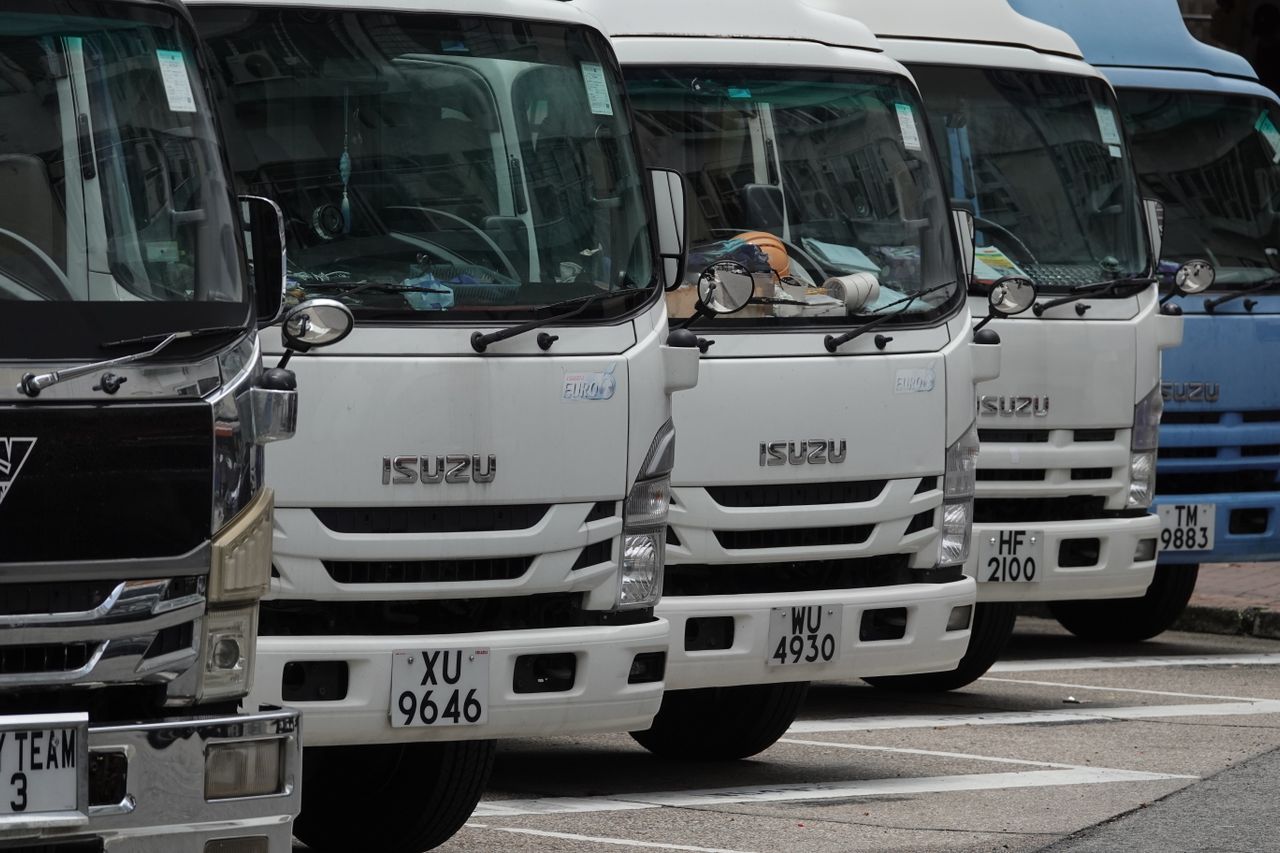
Because our operations extend beyond incorporation into industrial mobility, clients registering a company in the DRC through Live and Work Africa also gain direct access to executive vehicle rentals, commercial truck leasing, and heavy mining equipment hire, all built for the demands of Kinshasa and Central Africa’s toughest project environments. For a foreign investor moving from paperwork to active operations, that combination removes a significant layer of logistical friction.
Frequently Asked Questions
How long does company registration take in the DRC?
Incorporation typically takes three to four weeks through the GUCE single-window system, depending on documentation accuracy and the complexity of the chosen entity type.
Can foreign investors own 100% of a company in the DRC?
Yes. Under the DRC’s national investment code and OHADA commercial framework, foreign entrepreneurs and international parent companies can retain full equity ownership in most sectors without requiring a local shareholder.
What is the difference between a SARL and an SA in the DRC?
A SARL is a limited liability company suited to small and medium-sized businesses with lower capital requirements, while an SA is a public limited company designed for larger, capital-intensive operations that require a more formal governance structure.
Do I need to travel to Kinshasa to register my company?
In most cases, physical presence is not required. Registration can typically be completed through a Power of Attorney granted to a local representative or business setup partner acting on your behalf.
What is the role of GUCE in DRC company registration?
GUCE, the Guichet Unique de Création d’Entreprise, is the DRC’s single-window government agency that centralizes notarization, commercial court registration, tax enrollment, and business identification issuance, replacing the need to visit multiple ministries separately.
Ready to Register Your Company in the DRC?
Entering the DRC market doesn’t have to mean navigating unfamiliar bureaucracy on your own. Live and Work Africa’s specialists handle every stage of company registration in DRC, from statutory drafting to bank account setup, so you can focus on building your operations. Contact our team today for a tailored market entry consultation.