

Africa’s investment landscape has shifted noticeably over the past few years. Mining, infrastructure, logistics, and agribusiness are pulling in foreign capital across West and Central Africa, and the countries fueling that growth, Guinea, Liberia, the Democratic Republic of the Congo (DRC), and Angola, each offer a genuinely different path to market entry. Understanding those differences before you file a single document can save months of avoidable delay.
This guide breaks down what company registration actually looks like in each of these four markets: the legal frameworks behind them, the structures available to foreign investors, the realistic timelines and costs, and the practical differences that matter most once you’re on the ground. If you’re deciding where in Africa to establish your next entity, or how to approach registration in a country you’ve already chosen, this is the comparison you need.
Why These Four Markets Matter
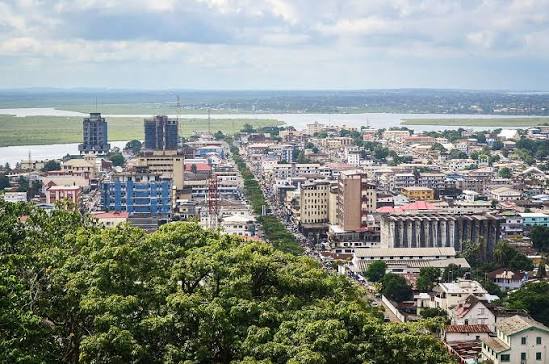
According to UNCTAD’s World Investment Report, foreign direct investment flows into Africa have remained resilient even amid global economic headwinds, with extractive industries and infrastructure continuing to draw a disproportionate share of that capital. Guinea, Liberia, DRC, and Angola sit at the center of some of Africa’s most active resource and infrastructure sectors. Guinea is the world’s leading bauxite producer. Liberia anchors West African port operations and agriculture. The DRC drives Central Africa’s mining and infrastructure boom. Angola runs one of the continent’s largest oil economies and is actively diversifying into logistics and construction. Each country’s registration process reflects its own legal heritage, and that heritage shapes everything from how fast you can incorporate to which documents you’ll need translated.
Legal Frameworks: Not All African Markets Play By the Same Rules
One of the most common misconceptions among first-time investors is assuming that “African business law” is one uniform system. It isn’t.
Guinea and the DRC are both member states of OHADA (the Organization for the Harmonization of Business Law in Africa), a shared legal framework used across 17 West and Central African nations. Under OHADA, company formation follows the Uniform Act on Commercial Companies, meaning the core structures, share capital rules, and governance requirements look broadly similar in both countries, even though the administrative processes differ.
Liberia runs on an English common-law system, a legacy of its founding history, and its Business Corporation Act closely resembles US corporate law. Documentation is in English throughout, which foreign investors, particularly those from common-law jurisdictions, often find more familiar to navigate.
Angola follows a civil-law tradition rooted in Portuguese legal heritage and is not an OHADA member. Registration runs through Angola’s Guichê Único da Empresa (Single Business Window), and documentation must be prepared in Portuguese.
Knowing which legal tradition you’re working within shapes your entire approach, from the language your documents need to be in, to whether your home-country legal concepts will translate cleanly, to who you’ll need on your advisory team.
Business Structures Available in Each Market
Despite the legal differences, all four countries offer a similar menu of entity types, adapted to their own frameworks.
| Country | Common Entity Types | Minimum Capital (approx.) | Foreign Ownership |
| Guinea | SARL, SA, Branch | 100,000 GNF (SARL) / 10,000,000 GNF (SA) | Up to 100% in most sectors |
| Liberia | LLC, Corporation, Branch | No fixed statutory minimum | Up to 100% in most sectors |
| DRC | SARL, SA, Branch | Set by Statuts; SA requires higher formal capital | Up to 100% in most sectors |
| Angola | Lda (limited liability), SA, Branch | Set by Statutes; no fixed statutory minimum for Lda | Up to 100% in most sectors, with some regulated exceptions |
Across all four markets, the limited liability company variant (SARL, LLC, or Lda depending on the country) is the default choice for small and medium enterprises, while the SA or Corporation structure suits larger ventures planning to raise outside capital or bring on multiple institutional shareholders.
Company Registration in Guinea
Guinea’s registration process runs through APIP (Agence de Promotion des Investissements Privés), which operates a one-stop shop covering commercial registry entry, tax ID issuance, and social security enrollment in a single file.
A standard SARL registration requires notarized or private-agreement Statuts, biometric identification for all directors and shareholders, proof of a registered office, and a capital deposit certificate. Processing typically runs 5 to 15 business days once a complete file is submitted, and all documentation must be in French.
Company Registration in Liberia
Liberia’s Business Corporation Act allows both LLCs and Corporations, registered through the Liberia Business Registry (LBR) under the Ministry of Commerce and Industry. Because Liberia’s economy is dollarized, capital requirements are typically expressed and paid in US dollars, a detail that simplifies financial planning for American and international investors.
Registration generally requires Articles of Incorporation, a registered agent with a Liberian address, and identification for directors and shareholders. English-language documentation and a common-law legal foundation make Liberia one of the more approachable entry points on this list for investors already familiar with US or UK corporate concepts.
Company Registration in the DRC
The DRC’s registration process runs through the Guichet Unique de Création d’Entreprise (GUCE), which consolidates commercial registry filing, tax registration, and social security enrollment. As an OHADA member, the DRC follows the same Uniform Act framework as Guinea, though local administrative practice and processing speed differ.
Investors should budget for a somewhat longer timeline than Guinea, generally 3 to 4 weeks, given the DRC’s larger administrative apparatus and the additional due diligence often applied to mining- and infrastructure-adjacent ventures, which represent a significant share of the country’s foreign investment activity.
Company Registration in Angola
Angola’s Guichê Único da Empresa centralizes company formation, tax registration, and commercial registry entry into a single filing process, modeled conceptually on similar one-stop shops elsewhere on the continent, but built around Portuguese civil-law requirements.
Registering in Angola means preparing your Statutes and supporting documents in Portuguese, securing a registered office address, and depositing share capital before your Certificate of Commercial Registration is issued. Certain sectors, including oil and gas, banking, and telecommunications, carry additional licensing requirements beyond standard company registration.
Side-by-Side: Timelines and Costs
| Country | Typical Processing Time | Primary Registering Authority | Document Language |
| Guinea | 5–15 business days | APIP | French |
| Liberia | 2–3 weeks | Liberia Business Registry | English |
| DRC | 3–4 weeks | GUCE | French |
| Angola | 2–4 weeks | Guichê Único da Empresa | Portuguese |
These timelines assume a complete, correctly prepared file. In every one of these markets, the single biggest driver of delay is the same: missing or incorrectly translated documentation, not government inefficiency.
Common Threads Across All Four Markets
A few requirements show up consistently, regardless of which of these countries you’re entering:
- A registered local office address is mandatory everywhere, and securing one before incorporation is often the trickiest logistical step for remote founders.
- Capital deposit before registration completion applies across Guinea, DRC, and Angola, and while Liberia doesn’t impose a fixed statutory minimum, most banks expect a reasonable initial deposit to open a functioning account.
- Certified translation is essential if your source documents (passports, corporate resolutions, parent-company certificates) aren’t already in the destination country’s official language.
- A local representative or registered agent makes remote incorporation dramatically smoother in every one of these jurisdictions, particularly during the bank account opening stage, which tends to be the slowest part of the process regardless of country.
- Sector-specific licensing applies on top of standard registration in mining, oil and gas, telecommunications, banking, and healthcare across all four markets.
Choosing the Right Market for Your Business
Guinea suits investors targeting bauxite, iron ore, and broader mining-sector supply chains, with a relatively fast, centralized registration process through APIP.
Liberia is often the most accessible starting point for investors from common-law countries, thanks to its dollarized economy and English-language legal system, and it’s well suited to port logistics, agribusiness, and trading operations.
DRC offers access to one of Africa’s largest mining and infrastructure markets, though it demands more patience through registration and a stronger emphasis on local partnerships and due diligence.
Angola fits investors focused on oil and gas, construction, and logistics tied to its ongoing economic diversification, though the Portuguese-language, civil-law environment calls for dedicated local legal support from day one.
For many investors, the right answer isn’t choosing just one. Multi-country strategies across two or more of these markets are increasingly common, particularly for logistics, fleet, and equipment-based businesses that need to move between mining and infrastructure sites across borders. A mining services contractor operating in Guinea’s bauxite corridor, for example, may find it natural to register a second entity in the DRC to serve copper and cobalt operations there, using the same corporate playbook with market-specific adjustments for language and local administrative practice.
It’s also worth thinking beyond the registration event itself. Once your entity exists on paper, the operational reality, securing office space, arranging site transport, hiring locally, and staying current on annual filings, is what determines whether your Africa expansion actually works. Investors who plan for that operational layer from the outset, rather than treating registration as the finish line, tend to move from incorporation to active operations far faster than those who don’t.
Common Mistakes That Slow Down Registration in Any of These Markets
Underestimating translation needs. Guinea, DRC, and Angola all require official-language documentation, and last-minute translation requests are one of the most frequent causes of delay.
Trying to secure a lease before incorporation is confirmed. Landlords in all four markets often want proof of registration before signing, while registries want proof of address before completing your file. A local representative or virtual office provider typically resolves this faster than trying to negotiate it directly from abroad.
Underbudgeting for banking timelines. Corporate account opening frequently takes longer than the registration itself, especially for foreign-owned entities, and should be planned for from the outset rather than treated as an afterthought.
Assuming one country’s process maps directly onto another’s. Even between Guinea and the DRC, both OHADA members, local administrative practice differs enough that assuming identical timelines or document formats leads to avoidable surprises.
Skipping sector-specific licensing. Standard company registration doesn’t cover regulated activities like mining, oil and gas, or telecommunications; those require separate authorizations pursued in parallel.
Frequently Asked Questions
Which African countries can I register a company in through Live and Work Africa? We support company registration in Guinea, Liberia, the Democratic Republic of the Congo, and Angola, with end-to-end services covering entity selection, filing, tax ID procurement, and corporate bank account setup.
Can foreign investors own 100% of a company in these markets? Yes, in most sectors, across all four countries. Foreign entrepreneurs and international parent companies can generally maintain full equity ownership under each country’s investment code, with additional authorization required only in specific regulated industries.
How long does company registration take across these countries? Guinea typically takes 5 to 15 business days, Liberia and Angola generally run 2 to 4 weeks, and the DRC usually takes 3 to 4 weeks, assuming a complete and correctly prepared file.
Do I need to speak French or Portuguese to register a company in these markets? Not personally, but your documentation does need to be in the correct official language: French for Guinea and the DRC, Portuguese for Angola, and English for Liberia. Certified translation services handle this for investors who don’t work in those languages directly.
Can I register a company without traveling to any of these countries? Yes, in all four markets, through a local representative or registered agent acting under a power of attorney. That said, banking steps often move faster with either in-person presence or an experienced advisor managing the process locally on your behalf.
Start Your Africa Market Entry the Right Way
Company registration across Guinea, Liberia, the DRC, and Angola follows four genuinely different legal traditions, but the fundamentals of getting it right stay consistent: complete documentation, realistic timelines, and local expertise that understands each market’s specific administrative rhythm.
Live and Work Africa handles turnkey company registration and legal compliance across all four of these markets, from entity selection and OHADA or civil-law compliance to tax ID procurement and corporate bank account setup, backed by fleet and logistics support once you’re operational on the ground. Reach out to our team today for a tailored consultation on which market fits your business, and let us manage the registration process while you focus on building your operation.