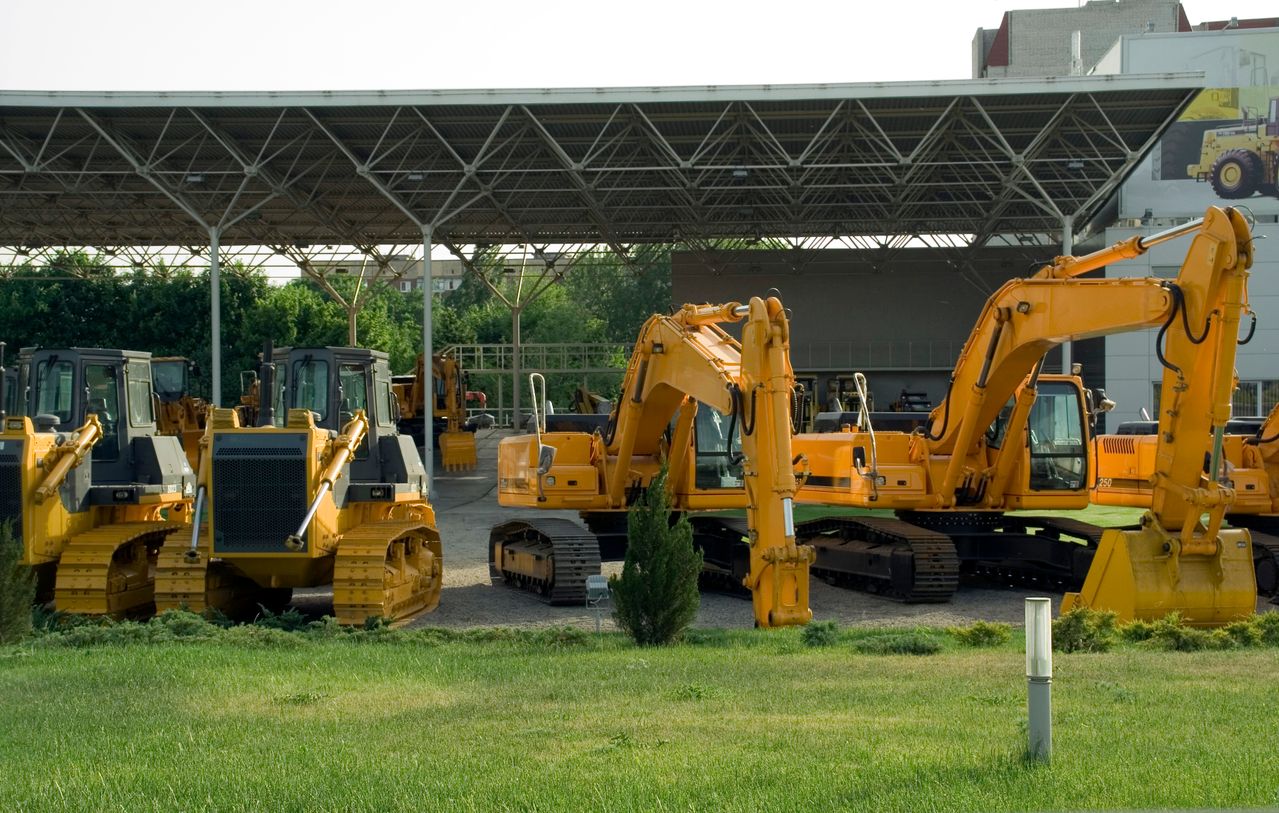

Heavy Equipment Rental DRC – Heavy equipment is essential for many large-scale projects in the Democratic Republic of the Congo (DRC), particularly in mining, construction, infrastructure development, roadwork, agriculture, and industrial operations. Excavators, bulldozers, wheel loaders, graders, cranes, and other machinery can help businesses complete demanding tasks more efficiently.
For companies operating in the DRC, purchasing heavy machinery is not always the most practical option. Equipment ownership requires substantial capital investment as well as ongoing costs for maintenance, storage, transportation, insurance, and repairs.
Heavy equipment rental in DRC offers an alternative by allowing businesses to access machinery according to their project requirements and operating schedules.
The DRC has significant natural resources, including copper and cobalt, as well as substantial potential in agriculture, hydropower, and other sectors. The World Bank reports that the country’s recent economic growth has been strongly supported by the extractive sector, while construction and services are expected to contribute increasingly to non-mining growth.
This makes reliable access to heavy machinery an important consideration for businesses planning projects in the DRC.
Why Consider Heavy Equipment Rental in DRC?
Renting equipment can provide greater flexibility than purchasing machinery, especially for companies handling temporary projects or entering the DRC market.
Lower Initial Investment
Buying heavy machinery can require significant upfront capital. Rental allows companies to use equipment without committing the full purchase price of a machine.
This can be useful for contractors that need equipment for a specific construction phase or mining operation.
Flexible Equipment Selection
Different stages of a project require different machines. An excavator may be necessary during excavation, while a grader or compactor may be required during road construction.
Rental allows businesses to select equipment according to the current phase of a project rather than maintaining a large permanent fleet.
Easier Fleet Management
Heavy machinery requires regular servicing and maintenance. Depending on the rental agreement, some maintenance and technical support responsibilities can be handled by the equipment provider.
This can reduce the operational workload associated with managing an independently owned fleet.
Suitable for Short- and Long-Term Projects
Equipment rental can be structured around different project durations. Depending on availability and provider terms, businesses may be able to arrange short-term, monthly, or longer-term rental agreements.
The appropriate arrangement depends on equipment utilization, project duration, transportation requirements, and maintenance responsibilities.
What Heavy Equipment Is Commonly Used in the DRC?
The appropriate machine depends on the project, terrain, material, operating conditions, and required capacity.
Excavators
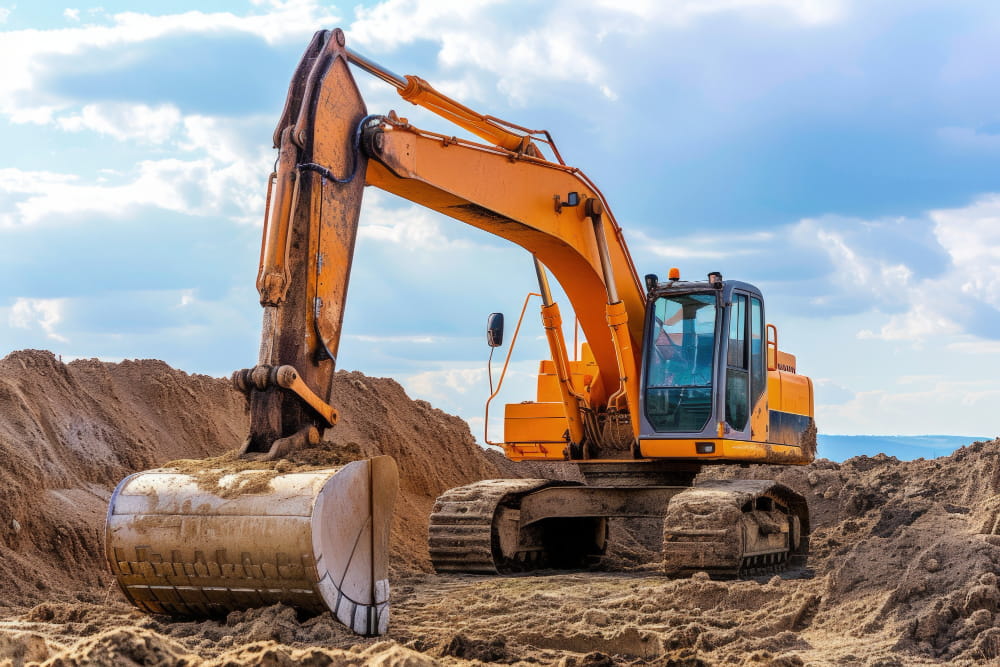
Excavators are widely used for digging, trenching, earthmoving, site preparation, demolition, and material handling.
For mining and infrastructure projects, companies should consider operating weight, digging depth, bucket capacity, hydraulic performance, and attachment compatibility when selecting an excavator.
Bulldozers
Bulldozers are designed for pushing and moving soil, rock, debris, and other materials. They can support land clearing, road construction, mine-site preparation, and infrastructure development.
The right bulldozer depends on terrain, material conditions, required pushing capacity, and project scale.
Wheel Loaders
Wheel loaders are commonly used to load and move materials such as soil, aggregate, rocks, and construction materials.
For mining and construction projects, businesses should evaluate bucket capacity, operating weight, lifting capacity, fuel efficiency, and site conditions before selecting a machine.
Motor Graders
Motor graders are particularly useful for road construction, surface preparation, drainage work, and maintaining access roads.
This type of equipment can be important for projects where maintaining reliable access to remote construction or mining sites is necessary.
Cranes
Mobile cranes can be used to lift heavy machinery, structural components, industrial equipment, and construction materials.
Before renting a crane, companies should determine the required lifting capacity, working radius, boom configuration, site access, and ground conditions.
Rollers and Compactors
Compaction equipment is used for roads, foundations, earthworks, and asphalt applications. Different rollers are designed for different materials and operating conditions.
Selecting the appropriate compactor can help achieve the required surface density and stability.
Industries That Depend on Heavy Machinery in the DRC
Heavy equipment can support several industries across the country.
Mining
Mining is one of the most important sectors of the DRC economy. Copper and cobalt production are particularly significant, while the country also has other mineral resources.
The World Bank has highlighted the importance of mining to DRC economic growth while also identifying infrastructure, transportation, energy, and diversification as important factors for the country’s long-term development.
Mining operations can require heavy machinery for excavation, loading, site preparation, access-road construction, material handling, and infrastructure maintenance.
Companies operating in the mining sector should also verify applicable requirements with the Ministry of Mines of the Democratic Republic of Congo, which provides information relating to mining titles, legislation, governance, and official mining-sector documentation.
Construction and Infrastructure
Construction projects may require multiple types of machinery throughout the project lifecycle.
Excavators can prepare foundations and trenches, bulldozers can clear and level sites, graders can prepare roads, and compactors can stabilize surfaces.
Infrastructure development is also an important area of investment in the DRC. The World Bank’s recent projects include transportation connectivity and major infrastructure programs, demonstrating the continuing importance of infrastructure development in the country.
Road Construction and Maintenance
Road projects often require a combination of excavators, bulldozers, graders, loaders, and rollers.
In the DRC, road conditions and access can be particularly important when projects operate outside major urban centers. The World Bank has noted the country’s significant road connectivity challenges and the importance of continuous maintenance after rehabilitation.
Agriculture and Land Development
Heavy equipment can also support large-scale agricultural and land-development projects.
Bulldozers and excavators may be used for land preparation, drainage, access roads, and site development, while loaders can support the movement of soil and other materials.
How Much Does Heavy Equipment Rental Cost in DRC?
Heavy equipment rental prices in the DRC vary considerably. There is no single standard rate that applies to every machine or project.
The total cost can depend on:
- Equipment type and model
- Machine capacity
- Rental duration
- Project location
- Transportation and mobilization
- Operator requirements
- Fuel arrangements
- Maintenance responsibilities
- Insurance
- Attachments and accessories
- Site conditions
For example, renting an excavator for a short construction project in an accessible location may have a different overall cost from supplying multiple machines to a remote mining site for several months.
Businesses should therefore request a project-specific quotation instead of relying only on a general daily rental rate.
What to Consider Before Renting Heavy Machinery in DRC
Choosing equipment based solely on rental price can create additional costs if the machine is unsuitable for the project.
1. Identify the Exact Application
Start by defining what the machine needs to accomplish.
Consider the type of material, required digging or lifting capacity, working environment, expected operating hours, and project duration.
A machine designed for general construction may not necessarily be suitable for demanding mining conditions.
2. Check Machine Specifications
Review the equipment’s operating weight, engine power, capacity, dimensions, attachments, and operating limits.
Equipment specifications should correspond to the actual requirements of the worksite.
3. Evaluate Equipment Condition
Before accepting a rental machine, inspect its general condition and maintenance history.
Important areas include the engine, hydraulic system, tires or tracks, attachments, brakes, safety systems, and signs of excessive wear.
4. Confirm Maintenance and Repair Support
Clarify who is responsible for scheduled servicing, emergency repairs, spare parts, and machine downtime.
For remote projects, technical support and replacement arrangements can be particularly important because delays in obtaining parts or repairs can affect project schedules.
5. Plan Transportation and Mobilization
Heavy machinery may require specialized transportation to reach the project site.
The rental agreement should clearly establish responsibility for mobilization, demobilization, transportation costs, loading, unloading, and any associated permits or documentation.
6. Consider Operator Requirements
Some projects may require experienced operators familiar with particular machinery.
Before signing a rental agreement, confirm whether the equipment is supplied with an operator or whether the customer must provide one.
Renting Equipment for Remote DRC Projects
Location is an important factor when planning heavy equipment rental in DRC.
Projects located far from major cities may involve additional transportation, logistics, fuel, maintenance, and technical-support considerations.
Businesses should provide the rental provider with information about the project location, road access, expected working conditions, and equipment requirements as early as possible.
This allows the provider to assess equipment suitability and determine the logistics required to mobilize machinery to the site.
For mining projects in particular, equipment planning should take into account the relationship between mining operations and transportation infrastructure. The World Bank has identified transportation infrastructure as a key constraint for the DRC’s mining sector and broader economic development.
Rental vs. Buying Heavy Equipment in DRC
The decision to rent or purchase depends on the company’s project requirements.
Rental may be suitable when:
- Equipment is needed for a limited period
- A company wants to avoid a large initial investment
- Machinery requirements change between project phases
- Specialized equipment is required temporarily
- The company is testing operations in a new market
Purchasing may be considered when:
- Equipmentqe equipment provides operational advantages
For businesses with changing project requirements, rental can provide greater flexibility because machinery can be matched to individual projects rather than maintained as a permanent fleet.
How to Choose a Heavy Equipment Rental Provider in DRC
A suitable rental provider should be able to understand the project’s technical and logistical requirements rather than simply provide a machine.
Before entering an agreement, businesses should ask about:
- Equipment availability
- Machine specifications
- Maintenance history
- Operator availability
- Transportation arrangements
- Fuel responsibilities
- Insurance coverage
- Repair and replacement procedures
- Rental duration and extension terms
- Total project costs
A clear rental agreement should also define responsibilities for machine damage, downtime, maintenance, transportation, and return conditions.
Heavy Equipment Rental in DRC for Business Projects
Access to suitable machinery can make a significant difference to construction, mining, infrastructure, and industrial projects in the Democratic Republic of the Congo.
Instead of purchasing equipment that may only be required for a specific project, businesses can consider rental solutions that align machinery availability with their operational schedule.
For companies planning operations in the DRC, equipment rental can also form part of a broader market-entry strategy. Businesses may require local business support, workforce solutions, logistics, and other services alongside machinery.
Frequently Asked Questions
1. What types of heavy equipment can be rented in DRC?
Common equipment categories include excavators, bulldozers, wheel loaders, motor graders, cranes, rollers, compactors, and other machinery used for construction, mining, infrastructure, and land-development projects.
2. How much does heavy equipment rental cost in DRC?
The cost depends on the equipment type, capacity, rental duration, location, transportation, operator requirements, maintenance, fuel, and insurance. A customized quotation is recommended for an accurate project cost.
3. Can I rent heavy equipment for a mining project in DRC?
Yes. Heavy machinery can support excavation, site preparation, loading, road construction, material handling, and other mining-related activities. Companies should ensure their operations comply with applicable DRC mining requirements.
4. Can heavy equipment be rented with an operator?
Depending on the provider and machine, equipment may be available with an operator or as equipment-only rental. Operator requirements should be confirmed before finalizing the rental agreement.
5. Is heavy equipment rental available for long-term projects in DRC?
Long-term rental arrangements may be available depending on equipment availability and provider terms. Businesses should discuss project duration, maintenance, transportation, and equipment requirements when requesting a quotation.
Get Heavy Equipment for Your DRC Project
Whether you are planning a mining operation, construction project, road development, industrial site, or land-development project, choosing the right machinery is an important part of project planning.
Live and Work Africa can help businesses identify heavy equipment solutions according to their project requirements in the Democratic Republic of the Congo.
Tell us your equipment requirements, project location, expected rental period, and type of work. Our team can help you explore a suitable heavy equipment rental solution for your DRC project.
Contact Live and Work Africa today to discuss your heavy equipment requirements in DRC.